
GENERAL
The dry weather continued throughout August, with the occasional shower and one or two storms that didn’t even turn the grass green. All the predictions are for a super El Niño, starting in October and continuing through January 2027. This comes on the back of the driest few months that we have experienced in the Mara in recent years. The implications are that there will be considerable run-off, as the environment is so overgrazed and degraded. This will probably lead to severe flooding and camps/lodges along riverbanks should be prepared. As the majority of camps are situated along rivers and streams, most of them constructed within the riparian belt, we can expect severe damage.
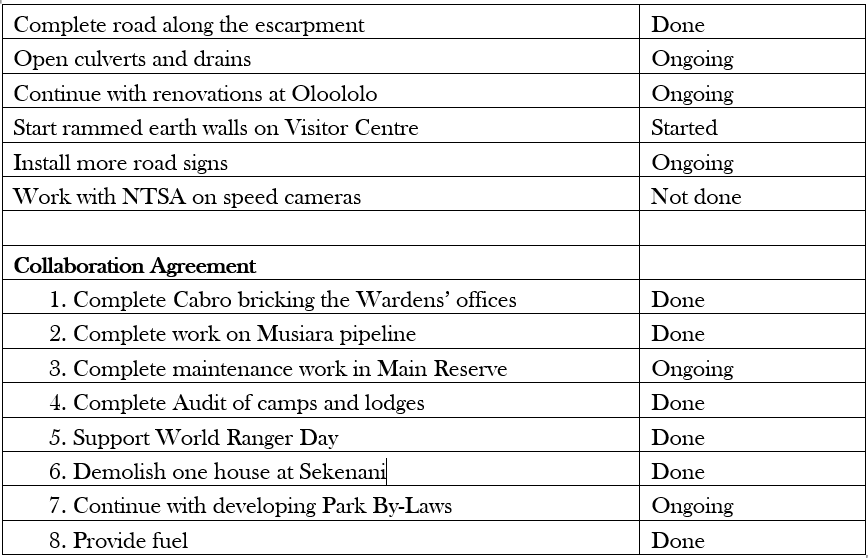
We completed the audit of camps and lodges in the Mara ecosystem and should have a report ready in early September.
COLABORATION AGREEMENT
The County asked to change the signatory on the Collaboration Agreement to that of the Chief Officer in Finance. This was done. Their lawyer then said that they wanted further changes, so we are currently operating without any agreement.
We installed new signs at the border near Sand River and in the Low Use zone in the Main Reserve.
We had to replace the injector nozzles on our Cat 140 grader in the main Reserve. This is the only grader operating there, the New Holland has been out of action for most of the past year.
The borehole at Look Out stopped pumping and we had to carry water in bowsers to keep the toilets open – more than 1,000 people use those toilets each day, The borehole was flushed and is now pumping properly.
We overhauled the windmill at Musiara and replaced two kilometers of piping. We are now repairing the drift by the gate.
The Keekorok airstrip was closed for repair. There are just too many large aircraft using these murram airstrips. We have constructed a uni-hut for the cleaners at the airstrip; they had no housing.
We constructed a uni-hut for the toilet crew at Keekorok, they had been living in tents prior to that.
We have started renovating rangers’ posts at Enombuai, Ol Kiombo and Olare Orok.
We have started maintenance and repairs at Enombuai, Ol Kiombo and Ol Are Orok
STAFF
Victor Kipkirui attended an Earth Ranger Technical Workshop in the Akagera National Park in Rwanda between the 17th and 21st. There were days set aside for LoRaWan and trackers and Ecoscope and Analytics. Both or real relevance to the work we are doing in the Mara.
We are very sad to report the death of a ranger, Joshua Sitoi, attacked by a buffalo whilst on patrol on the 31st. Our sympathies and commiserations to his family and friends. This is a stark reminder of the danger our rangers face every day in trying to protect this ecosystem. At least two of our rangers have also been injured by poachers this year alone.
WILDLIFE
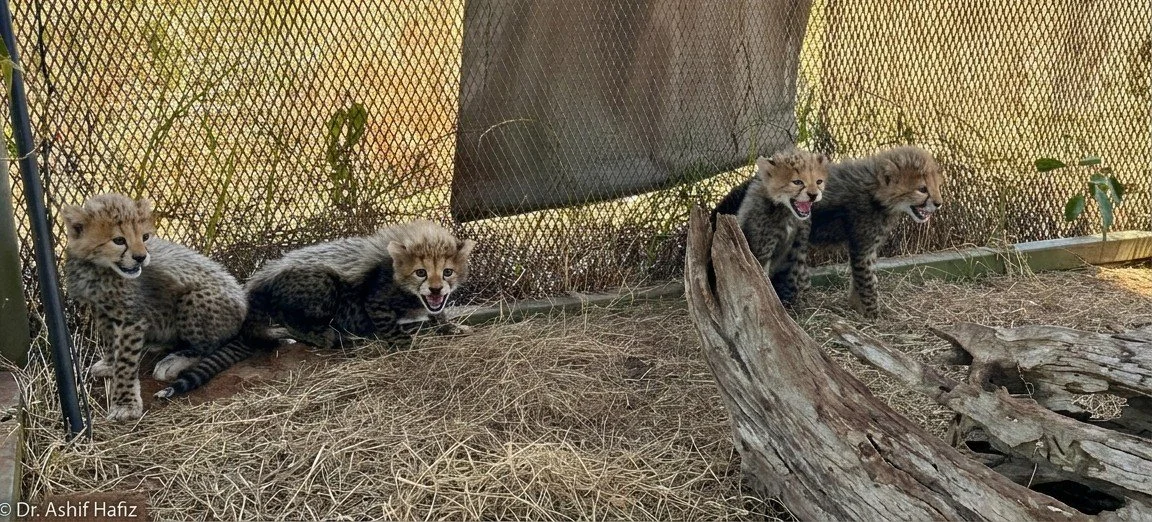
A female cheetah was injured in the Main Reserve on the 13th, after she tried to catch an impala. She was paralyzed and moved to our enclosure in the Triangle, together with her four young cubs. Sadly, she died on the 15th. We will rear the cubs until they are old enough to be released.
The Triangle started filling up with wildebeest at the beginning of August and by mid-August we had about 200,000 animals in the Triangle, most of them concentrated between Serena and Mara Bridge. A rainstorm on the 17th sent the wildebeest back into the Serengeti and by month’s end there were very few left in the Triangle. There is no sign of imminent rain and there is a good chance the many of the wildebeest will return.
A balloon pilot reported a fresh elephant carcass on the 30th, it appears to have died of natural causes.
TOURISM
Tourist numbers in July were almost identical to the same month last year (10,818 vs 10,521 NRA last year). Only 40.7% of our non-resident visitors paid us, the rest paid elsewhere, with the majority coming from Kichwa or the main Reserve.
We have deployed all 150 of our vehicle trackers and require another 200, once people realized that they would be unable to receive off-road privileges in the controlled off-road area they suddenly became keen to get them.
The first half of August was extremely busy but visitor numbers started dropping in the last week. We don’t anticipate a significant drop on last year. But there are concerns going forward.
SECURITY
Our teams managed to arrest 63 poachers, all in the Serengeti. They recovered 1,274 snares, rescued 96 wildebeests and found where 62 had been butchered, together with two topi and one zebra. Fourteen wildebeests were found dead in snares.
We held World Ranger Day at Oloolamutia on the 31st July. We were able to showcase much of the work that our rangers do on a daily basis, from:
Working with our dogs, both sniffer and tracker dogs;
Our work with Earth Ranger and reporting;
The equipment we use is patrols and ambushes;
The work done by our anti-harassment teams;
The work done by our veterinary team.
We have lost both our tracker dogs, the first to Trypanosomiasis and the second to gastrointestinal bleeding. This is a major blow and sets us back considerably.
The rangers continued with daily patrols and managed to collect 383 wire snares between the 27th July and 3rd August. Seventeen wildebeests were rescued from snares.
The Iseiya team crossed the river on the 4th for a three day patrol in the Northern Serengeti – they managed to arrest eight poachers, one of them was tracked by our tracker dog. They recovered ten snares. The poachers across the river tend to use machetes to immobilize animals, and they seldom set snares. During the same period the Ngiro-are team concentrated in the Lemai Wedge and managed to collect 33 snares and rescue one zebra. They found where two wildebeests and a topi had been butchered.
One person was arrested in the Lemai Wedge on the 8th, he was checking two snares, one wildebeest was rescued.
The Ngiro-are team crossed the river on the 8th for a three-day patrol and managed to arrest four poachers.
The ranger teams collected 48 snares on the 10th and managed to arrest two people in different operations. The following day the Iseiya team crossed the river and caught four poachers. They then caught another seven poachers over the next two days. One group had been camping in the Serengeti, had killed at least four wildebeest and had six donkeys with them to carry out the meat. Another six wildebeest had been butchered, as had a zebra. Six snares were collected.
The Ngiro-team collected 50 snares in the Lemai Wedge on the 12th, caught one person on the 14th at Kokamange and collected another 47 snares. The next day, the 15th, 21 more snares were collected, five wildebeest were rescued and one had been butchered.
The Seiya team went on a three day patrol into the Northern Serengeti and managed to arrest seven people in four separate incidents; two during the day and two separate occasions at night. A total of 22 snares were collected and three wildebeest had been butchered. The last poacher to be arrested had five dogs with him.
The Ngiro-are team also went on an extended patrol on the 17th and managed to arrest eight people around Tabora B and Ngira in the Serengeti. They came across two large poachers’ camps and said that numerous animals had been butchered, maybe as many as ten wildebeest had been butchered and the meat dried. 37 wire snares were collected and two animals rescued.
Fourteen more snares were collected on the 17th, two wildebeest were rescued. We continued to recover snares and arrest people and on the 20th a total of 137 snares were collected by both teams. Two poachers were arrested by the Ngiro-are team and our rangers managed to rescue 17 wildebeest, one other had been butchered.
The Iseiya team crossed the river into the Northern Serengeti for a four-day patrol on the 21st and managed to arrest 15 poachers. 52 wire snares were collected and in one camp the rangers found that 13 wildebeest and one topi had been butchered and the meat dried – five of that group were arrested. One other wildebeest had been butchered on the last day, when three poachers were arrested.
The rangers concentrated in the Lemai Wedge between the 26th to 29th, the Ngiro-are team managed to arrest four people on the 26th. A total of 201 snares were collected in three days, 12 wildebeest were rescued and four were found dead in snares.
Our combined teams collected 211 snares in the Lemai Wedge on the 30th. Twenty seven wildebeest were rescued, 21 had been butchered and 10 were found dead in snares.
REVENUE & ACCOUNTS
The increase in Park Fees in July resulted in a significant increase in Revenue, although slightly less than for the same period last year (US$ 1,884,935 vs US$ 1,939,585 last year).
REPORT ON FOCUS FOR AUGUST 2026
We completed the new road along the escarpment. This has opened up one of the most scenic drives in the Mara and will no doubt be heavily used.
We have started on clearing culverts and drains in preparation for the rains in October.
We have almost completed the renovations on staff housing at Oloololo, we have also constructed a new kitchen/mess for the staff there.
The Visitor Centre is progressing well and the rammed earth walls for the small cafeteria have been completed.
FOCUS FOR SEPTEMBER 2026
Continue with Visitor Centre;
Start renovating houses at Iseiya;
Start on two classrooms for community;
Order 60 new vehicle trackers;
Install water filters at Ngiro-are and Oloololo; and
Construct more signs.
Work on Collaboration Agreement
Hold Planning Meeting;
Continue with road maintenance;
Finalize Park By-laws;
Finalize Collaboration Agreement;
Complete drift at Musiara;
Complete renovations at Enombuai;
Continue with road repairs; and
Remove asbestos roofing at Sekenani.